

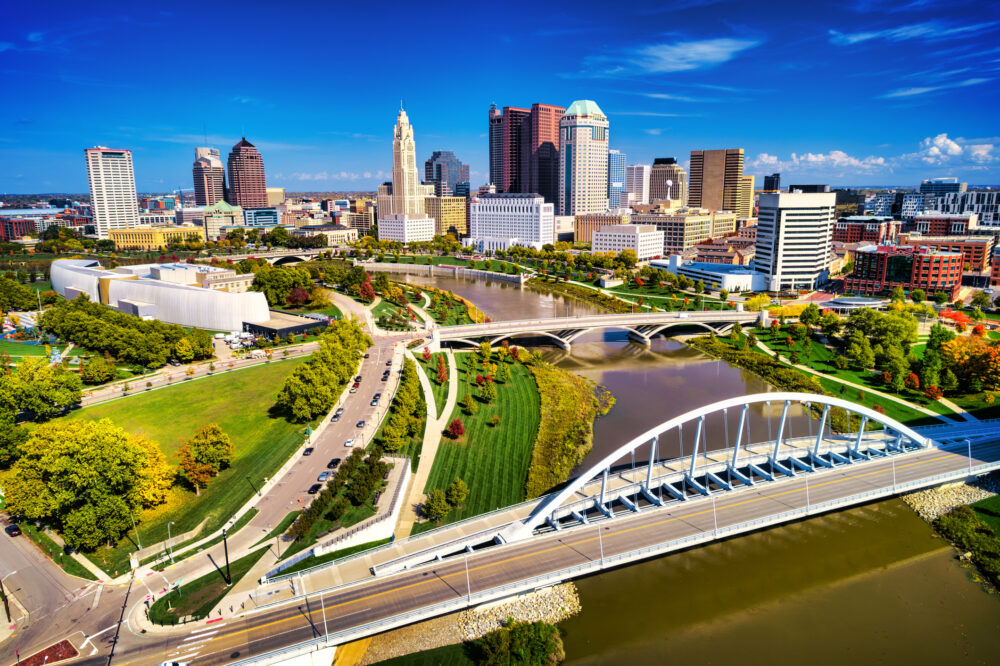
Downtown Columbus from above: riverfront, bridges, and a city that keeps adding momentum.
Columbus is growing at a great pace, fueled by its diverse job market and steady flow of new residents. This is not your one-time-big-time boom, but rather, a consistent expansion that’s creating a housing market backed by real, long-term demand.
How you navigate the growth in Columbus, Ohio will depend on your perspective. For sellers, it means strong opportunities supported by a stream of new buyers. For those buying or relocating, it means requiring a clear strategy to find a neighborhood before the best options are claimed.
Table of Contents:
Here, we’ll look at factors contributing to this growth and their impact on housing demand across the region. Whether you’re moving from across the country or just across town, this guide will provide the local lens you need to plan your next move.
COLUMBUS’S GROWTH AT A GLANCE
|
A COST OF LIVING THAT SUPPORTS YOUR LIFESTYLE
While “affordability” is often used as a buzzword, it’s actually a structural advantage in Columbus − one that allows your dollar to go much further.
Major economic benchmarks (like the RPP and C2ER indexes) confirm that daily expenses like groceries and services cost less here. On a national scale, the cost of living in the Columbus metro consistently sits about 4.5% to 6% below the U.S. average.
In terms of housing, as of early 2026, the median sale price for a home in Columbus is approximately $290,000, which remains significantly lower than the national median. When you pair these costs with a median household income that has grown to over $91,000 for those in the buying market, the math favors long-term stability.
What this means for you: Your income stretches further here, giving you the financial breathing room to choose a neighborhood based on your commute and community preferences rather than just your budget.
A GROWING COMMUNITY YOU CAN COUNT ON
People aren’t just passing through Columbus anymore − they’re planting roots and staying for the long haul. Figures from the US Census Bureau (2010 to 2020) show a staggering rise in the city’s population by more than a hundred thousand − an unprecedented growth only Columbus manifested among all urban areas in the entire Midwest. Latest estimates (2024) place its population at roughly 67,000 shy of a million. Two factors drive this growth:
-
- NEW PEOPLE MOVING INTO THE AREA (DAILY INFLOW): People move here from all over the world, keeping the city’s population on the rise even when other regions slow down.
- RESIDENTS CHOOSING TO STAY (DAILY STICKINESS):
About 80.3% of residents lived in the same house a year ago − meaning once people arrive, they tend to stay.
Because so many residents stay put, Columbus, Ohio manages to focus its growth on new areas rather than just filling empty houses. This dynamic is already happening in Delaware County, part of the metro area just north of the city, which saw a massive 11.1% increase in population in only four years.
COLUMBUS’S ACTIVE ANNEXATION EXPLAINEDUnlike many Midwest cities boxed in by their suburbs, Columbus expanded from 40 square miles in 1950 to over 220 square miles today through aggressive annexation. By trading city water and sewer services for new territory, the city ensured it had the space to grow its tax base and infrastructure alongside its population. |
A STEADY JOB MARKET WITH MORE THAN ONE ENGINE
While many cities bet on one industry for growth, Columbus, Ohio runs on several powerful engines at once. By spreading out across tech, finance, healthcare, and manufacturing, the region creates a safety net of variety. If one field slows down, others are usually still hiring.
You can see this balance in the big names here: JPMorgan Chase and Nationwide in finance, Amazon in tech, and Cardinal Health in healthcare. Combined with Honda’s manufacturing, university jobs, and state government (more about these later), the market remains strong in its variety.
The city is also investing in its future with CMH Next, a $2 billion project to replace the airport’s 1958 terminal with a modern, million-square-foot facility. Opening in early 2029, this brand-new terminal will increase capacity to 13 million passengers annually and feature a centralized security checkpoint, 36 gates, and international customs. It’s a massive commitment to the region’s growth, making sure that Columbus remains a connected global hub for decades to come.
What this means for you: This job diversity allows you to grow your career and stay in the same home for years. Whether you’re a nurse, a tech specialist, or a manager, you’ll find a great new job in town.
INSTITUTIONAL EMPLOYERS THAT PROVIDE THOUSANDS OF YEAR-ROUND JOBS
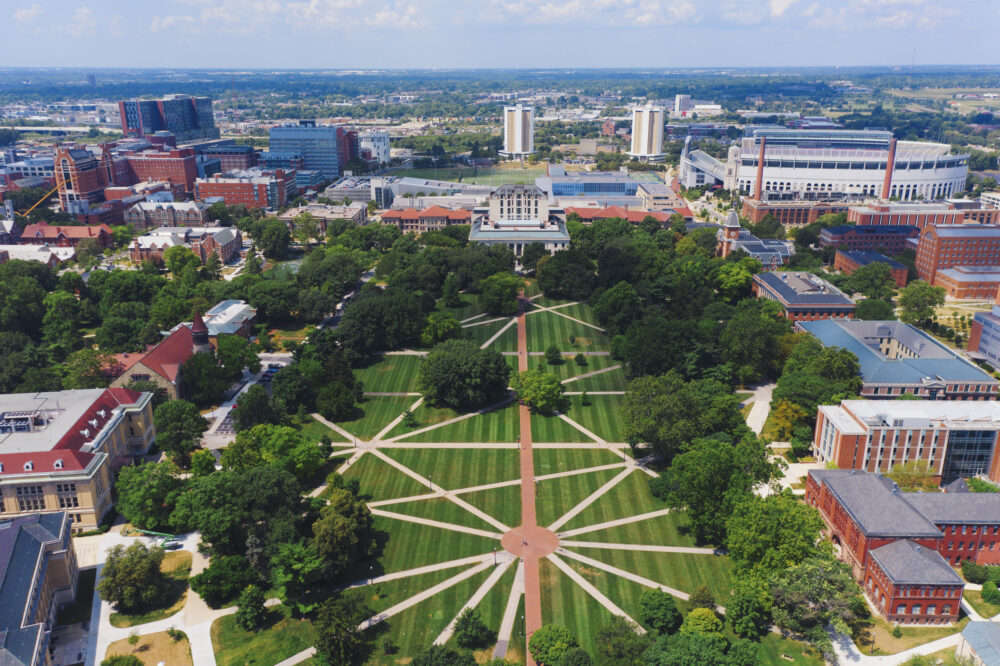
Ohio State’s Oval and campus core in Columbus.
While a diverse job market is great for variety, the growth in Columbus, Ohio also relies on massive employers that provide thousands of jobs, notwithstanding the peaks and dips in the economy.
For instance, The Ohio State University (OSU) supports a massive workforce of over 37,000 people in roles ranging from high-level research to campus services. The healthcare sector adds another layer, with OhioHealth employing over 35,000 residents and Nationwide Children’s Hospital supporting over 16,000 employees.
Because these institutions are permanent fixtures, they create predictable patterns that make the city easier to navigate. A perfect example is the Olentangy Trail, a popular path that runs from Worthington to Downtown. It acts as a direct commuter artery, linking residential neighborhoods to the university and medical centers, allowing thousands of people to walk or bike to work every day.
What this means for you: Your home’s value and neighborhood energy are backed by a steady, year-round workforce, allowing you to build a life around a reliable job market and a predictable commute.
SMART INFRASTRUCTURE THAT KEEPS THE CITY MOVING
To keep the region from feeling crowded, Columbus is constantly improving its busiest areas through projects like the Downtown Ramp Up. This project is fixing the major highway split where I-70 and I-71 meet, making the drive safer and smoother by removing old, confusing ramps. Many of these big changes will be finished by the end of 2026, clearing up one of the city’s biggest stress points.
The region is also building more than just roads through a big plan called LinkUS, which is adding hundreds of miles of bike paths, sidewalks, and new rapid transit bus lanes. At the same time, the city is creating beautiful public spaces like the Scioto Mile, a massive riverfront park with a huge fountain and trails. Additionally, new spots like the Great Southern Metro Park, opening in April 2026, give families even more room to play and breathe as the surrounding neighborhoods grow.
What this means for you: You have more than one way to get to work or explore the city because you may choose a home near new bike trails or a rapid bus line to save time and stress. By testing your commute during a busy morning, you’ll find a home base that makes your daily routine feel calm and predictable.
A HOUSING MARKET BUILT FOR LONG-TERM VALUE
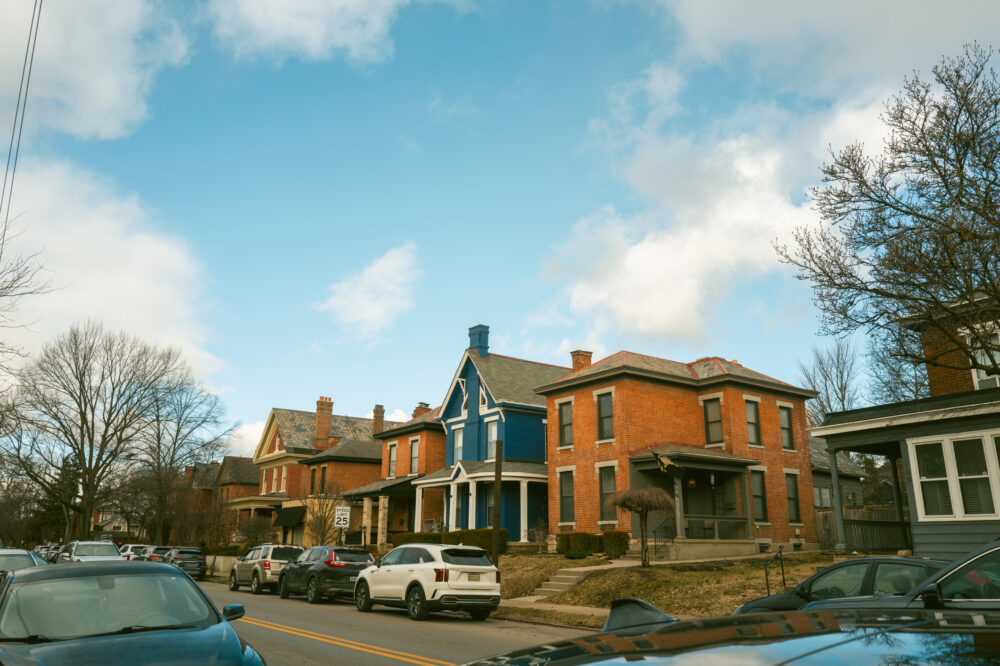
A street-level look at the types of houses for sale that you’ll see in Columbus, Ohio.
The gap between jobs and housing is one of the strongest signs of a healthy, growing city. In Columbus, Ohio real estate, the region adds about 2.5 new jobs for every one home built. While this means the market is busy, it also means your investment is backed by real demand. Even with 19% more houses for sale than last year, the market remains strong because people actually want to be here.
Because the city’s growth has been well-planned, you don’t have to guess where the good areas are. Instead, you may choose a home based on your preferred lifestyle. If you travel, you may want to find a spot near the airport. If you have a family, you may pick a neighborhood with the right school.
What this means for you: You’re buying into a city where your home’s value is supported by a constant stream of new jobs and new neighbors. While you have more options to choose from than last year, the steady demand means you won’t get buyer’s remorse.
NEIGHBORHOODS TO EXPLORE IN COLUMBUS, OHIO
|
FAQs
Is Columbus’s growth stable or cyclical?
Columbus’s growth is stable because it relies on many different industries like healthcare, finance, and education. This variety prevents the boom-and-bust cycles seen in cities that rely on only one type of business.
What’s the difference between Columbus city growth and Columbus metro growth?
City growth counts only the people living within the official city limits. Metro growth tracks the entire multi-county region, which better reflects how people actually live, work, and travel across the area.
What limits the growth of Columbus, Ohio right now?
The biggest limit is a shortage of housing, as the city currently adds 2.5 new jobs for every one home built. While highway construction is a temporary bottleneck, the city is actively upgrading infrastructure to keep up with demand.
Which parts of the Columbus metro are growing fastest, and why do county growth rates vary?
Delaware County is growing the fastest because it has the most open land available for new housing. Other counties grow at different speeds based on their available space and how quickly they can approve new building projects.
Why is Columbus growing faster than many other Midwest cities?
Columbus outpaces its peers by combining strong population gains with a diverse job market. Additionally, having steady, massive employers like the state government and major hospitals ensures the region doesn’t rely on just one industry to attract new residents.
PLANT YOUR ROOTS IN A CITY ON THE RISE
Navigating the growth in Columbus is much easier when you have a local team to turn big trends into a plan that fits your life. Whether you are relocating or looking for more space, Conley & Partners helps you cut through the noise, narrow your search, and move with clear expectations.
Founded by Jean Ann Conley in 1985, the team has deep roots in Central Ohio and has spent decades guiding households through the area’s neighborhoods, schools, and daily trade-offs. With experts like Amy Conley, Becky Weprin Dausen, and Rachel Bobbitt, you’re working with a dedicated group that will support every detail of your move.
If you are ready to talk through your commute, your priorities, and your timeline, call us at 614.595.4344 or send a message today.