

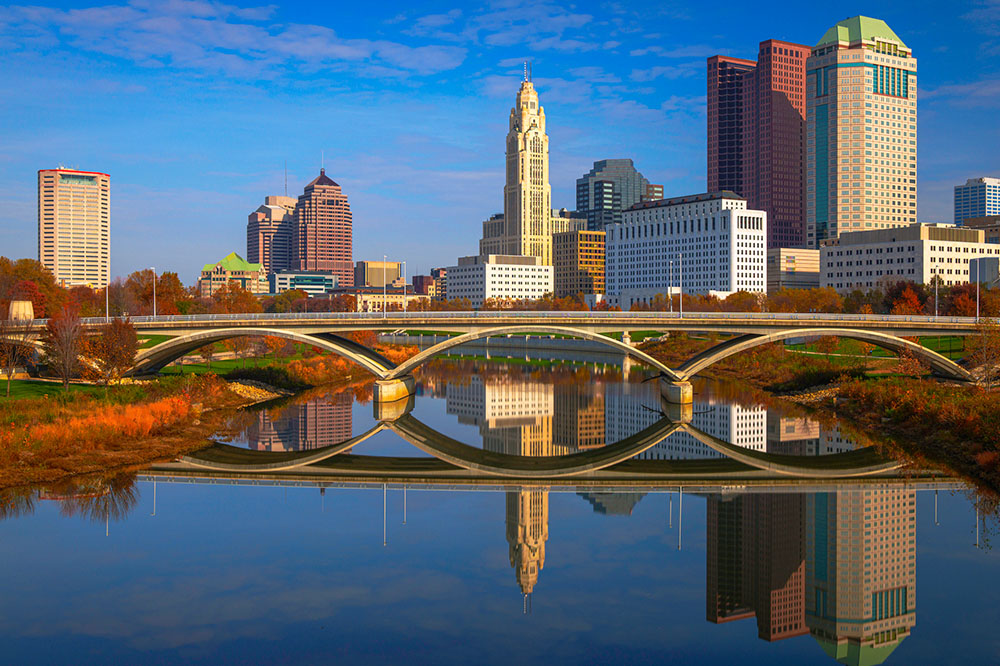
Columbus sits at the center of Ohio’s Silicon Heartland story.
The term “Silicon Heartland” may sound like a marketing slogan the first time you hear it. But in Central Ohio, it points to a real shift in the region’s economy, with Columbus and its surrounding communities becoming the center of a massive buildout around computer chips, data tech, and advanced manufacturing.
Ultimately, the Silicon Heartland represents a sign of direction − the result of years of planning and community development. Understanding this broader story is the best way to see how these changes connect to daily life, local neighborhoods, and the Central Ohio real estate market.
Table of Contents:
OHIO’S SILICON HEARTLAND: A SNAPSHOT
|
DEFINING THE SILICON HEARTLAND

The Silicon Heartland story starts with long-term investment in chipmaking.
Consider the Silicon Heartland as a way of describing how Central Ohio is shifting its place in the national economy. It’s a move toward industries like computer chip manufacturing and data infrastructure that require long-term planning and a lot of space.
The region’s economic roots
Before this shift, Central Ohio built its reputation on a different economic mix. The region has long been known for logistics and distribution, supported by the crossroads of major interstate highways, along with manufacturing, retail headquarters, insurance companies, and the research power of The Ohio State University. These industries created a stable economic base and the infrastructure that large-scale technology investments now rely on.
How it differs from Silicon Valley
Unlike the startup culture of Silicon Valley, the Silicon Heartland focuses more on the heavy lifting of production, energy, and logistics in places like New Albany and Licking County. Manifesting this culture is Intel’s plan to invest over $28 billion into two massive, next-generation chip factories.
What this shift means for the region
Rather than replacing Central Ohio’s traditional industries overnight, these semiconductor projects are gradually adding a new layer to the region’s economy. As suppliers, engineers, and new infrastructure arrive alongside existing industries, the effects will appear at different speeds across communities. Keeping that gradual change in mind helps explain how new development, incoming residents, and shifts in the real estate market may unfold throughout Central Ohio.
| FUN FACT: Intel’s initial $20 billion phase in Licking County is the largest single private-sector investment in Ohio’s history. This record-breaking scale shows just how significant the Silicon Heartland shift is for the region. |
THE CASE FOR OHIO
Ohio is a top choice for these types of projects because it offers the practical advantages that major industries need to reach their customers. The growth in this region is driven by the specific factors companies prioritize when planning expensive, long-range manufacturing.
- SPACE AND INFRASTRUCTURE: The region provides large, flat sites with reliable power and water supplies that high-tech factories usually need. It also offers easy access to major freight corridors, making it simple to ship goods across the country.
- CENTRAL LOCATION: Central Ohio’s location puts 43% of the U.S. population within a one-day drive, making it a strategic hub for modern supply chains.
- LOWER COSTS: Ohio offers a more affordable environment with more room to grow than crowded coastal markets, helping companies manage their land prices and daily operating costs while they scale up.
- A READY WORKFORCE: A successful project needs more than just land − it needs people. Local institutions like Ohio State are already helping by offering certificates and special classes in semiconductors to ensure the local talent pipeline is ready for these new technical roles.
- STRATEGIC TIMING: There’s a national push to produce more computer chips domestically to keep the supply chain secure. This makes Ohio’s traditional manufacturing strengths more valuable today than they were a decade ago.
THE INSTITUTIONAL STRENGTH OF COLUMBUS
As the center of an 11-county economy, Columbus offers the scale needed to support major industrial growth. With 10 Fortune 1,000 companies and a massive network of college campuses, the region has the resources and talent to sustain long-term investment.
These deep roots keep research, hiring, and business operations connected, and one of the best places to see this in action is the Carmenton Innovation District on Ohio State’s west campus. This 350-acre project has already attracted about $900 million in investment to help universities and employers work together on new research.
The region’s success also relies on a wide variety of industries beyond just computer chips.
- LIFE SCIENCES: Columbus is home to global leaders like Cardinal Health and Battelle, the world’s largest independent research organization. Local startups like Andelyn Biosciences are also making waves, with the said company pioneering new gene therapies to treat rare diseases.
- CIVIC TECHNOLOGY: Groups like Smart Columbus serve as community labs to solve local problems. They’ve launched programs to distribute computers to thousands of neighbors and created a Community Information Exchange to help residents find health and housing services more easily.
THE LONG-RANGE VIEW OF BIG TECH
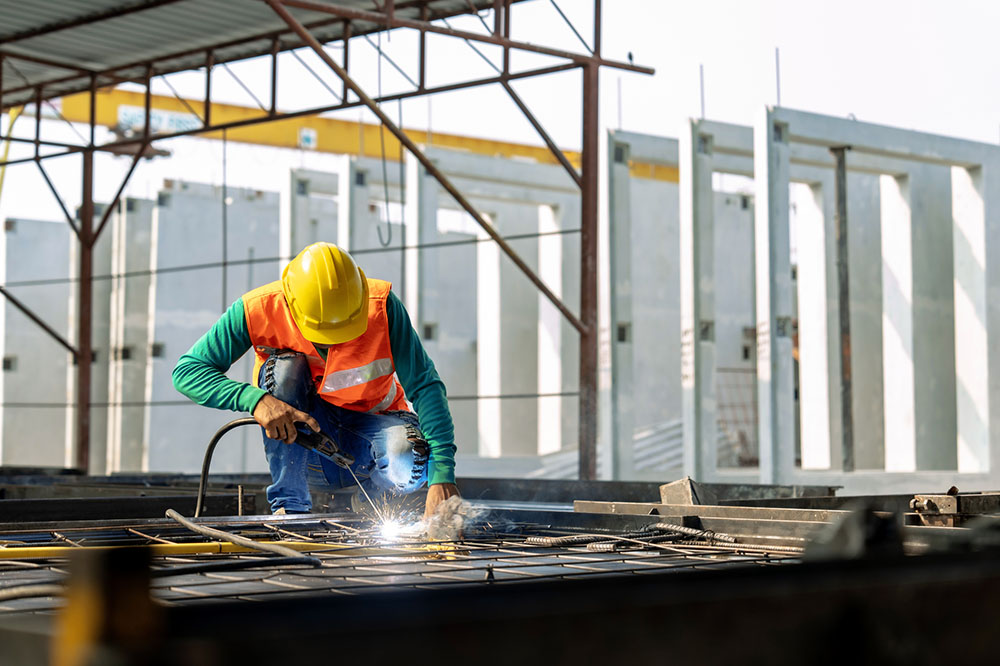
Even with timeline changes, the Silicon Heartland buildout is still taking shape.
Large manufacturing projects rarely move in a straight line. Because complex chip factories take years to fund, build, and staff, these announcements become long-range commitments rather than overnight changes.
The Intel campus in Licking County serves as a perfect example of this shifting pace. When ground was broken in 2022, the original goal was to have the first factory manufacturing chips by 2025. However, after an initial adjustment to 2027, Intel updated its outlook again in February 2025, now expecting the first factory to finish in 2030 and the second in 2031.
This adjustment is normal among major companies as they manage capital and react to the global market. It’s not an indication that work has stopped. To illustrate, the city of New Albany had already finished nearly 80% of the infrastructure work for the site before 2024 ended. This means that the bones of the project − roads, utilities, and underground piping − are being built right now, making sure that the region’s foundation is ready even if the factory doors open later than originally expected.
For those watching the region, the real value isn’t in one building’s opening date, but in the ecosystem growing around it. The fact that the city is finishing most of the site’s infrastructure despite a shifting timeline shows that this regional change is permanent.
| FUN FACT: Students at Johnstown Monroe Intermediate School named one of the site’s giant cranes “Ms. Armstrong,” which is a nod to astronaut Neil Armstrong and to Ohio’s history in space and aviation. |
HOW TECH INFLUENCES HOUSING AND LIFESTYLE
Economic growth from major employers changes housing gradually as more people move into the area for work. In fact, estimates from the Mid-Ohio Regional Planning Commission (MORPC) suggest that the 15-county region will add about 726,000 people, 272,000 households, and 357,000 workers by 2050.
This growth will increase demand for transportation, apartments, and homes for sale in Central Ohio. Franklin County, in particular, is expected to handle half of this population boom. Areas like Delaware and Licking counties are also growing quickly as residents choose between established neighborhoods near job centers and newer homes further out.
As the population increases, maintaining a short commute becomes a priority, especially since 80% of Central Ohioans currently spend less than 35 minutes traveling to work. Local projects like LinkUS are designed to keep daily routines smooth by connecting transit, housing, and jobs into a single system. This strategy ensures that new neighborhoods and properties for sale in Columbus are built near the services and workplaces people use every day, making the location of a home and its connection to the community just as important as its square footage.
To keep up with this growth, the region needs a major boost in housing supply, requiring over 100,000 new units in the next decade. Industry estimates suggest that the area must add roughly 14,000 new homes every year through 2032 to keep pace with the incoming workforce. These trends create long-term ripple effects in where people choose to live and how neighborhoods develop, providing a clearer lens for anyone navigating the Central Ohio real estate market.
WHAT THIS MEANS FOR BUYERS AND RELOCATORS
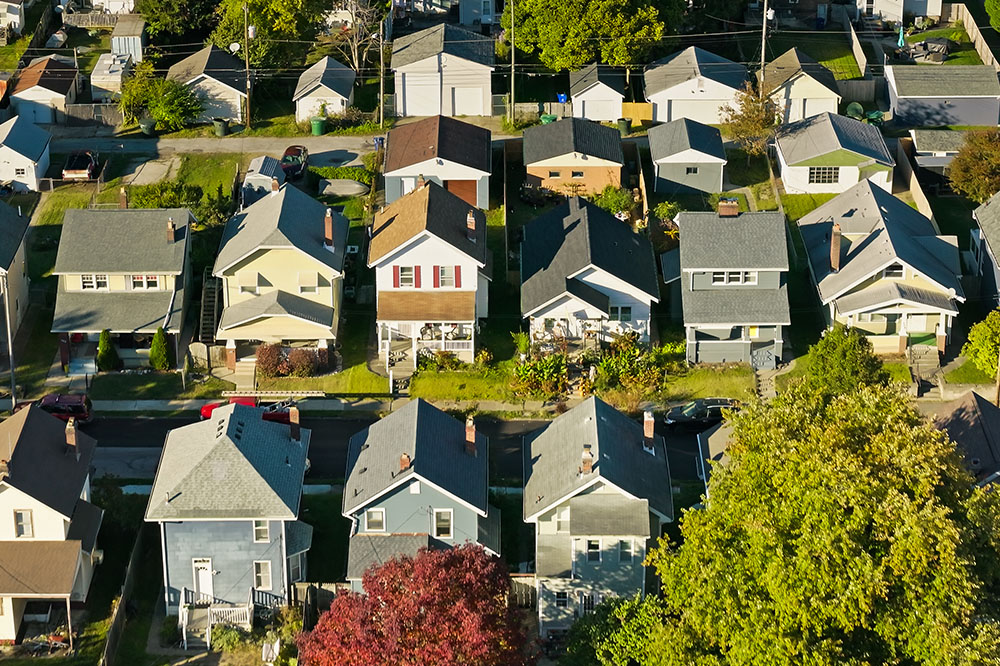
The Silicon Heartland is shaping housing demand beyond Columbus, with ripple effects across Central Ohio.
Economic growth usually hits the housing market in a gradual wave. As more people move here for tech jobs, you’ll see more demand for everything from houses for sale in Columbus, OH to rental apartments in other parts of the state’s central region. While it won’t change every neighborhood overnight, it does mean the area is preparing for a much busier future.
Here is what you can expect as a resident or future neighbor.
- MORE VARIETY IN MORE LOCATIONS: You’ll see a wider range of housing options popping up in both the city center and the outer counties. While Franklin County will handle a lot of the new neighbors, expect fast-paced development in Delaware and Licking Counties among those looking for newer builds and more space.
- A PREMIUM ON CONVENIENCE: To maintain the region’s current average commute of under 35 minutes, planners are prioritizing housing built closer to major job centers. Expect the convenience factor − how close a home is to work − to matter just as much as its square footage.
- BETTER-CONNECTED NEIGHBORHOODS: You should look for new developments that are designed to link housing, transit, and services together. The goal is to ensure that as the area grows, you’ll still be able to move between work, home, and local shops without facing significant traffic.
- A SIGNIFICANT INCREASE IN CONSTRUCTION: To keep the region affordable, thousands of new homes must be built every year. Expect to see ongoing construction and real estate development as the city works to ensure there is enough room for everyone joining the local workforce.
FAQs
Which Central Ohio communities are most affected by tech growth?
While New Albany and Licking County are the main hubs, the growth is spreading across the entire region. Expect to see the most change in Franklin, Delaware, and Licking counties as more people move in for jobs.
How do you evaluate Central Ohio real estate without getting caught up in hype?
Focus on how a home fits your daily life rather than just following the latest trends. Ask yourself if the commute works for you and if the neighborhood has the services you need every day.
How far out are tech-related ripple effects reaching from Columbus and New Albany?
The impact extends far beyond the towns next to the big factories. Think of this as a 15-county story where new housing and roads are being planned far beyond the city center.
What does tech growth mean for buyers who want space outside Columbus but still need access to job centers?
If you want more land, you have to balance that extra space with your weekly routine. Make sure any home you choose has an easy connection to the main highways or transit so you don’t get stuck with a difficult commute.
EXPERIENCE YOU CAN TRUST IN A GROWING MARKET
Making sense of a growing region is much easier with a partner who understands the local landscape. Conley & Partners matches you with the neighborhoods and schools that fit your specific daily routine.
With roots in the community, the team uses decades of experience to help you navigate Ohio’s Silicon Heartland with the utmost clarity. Their approach is built on long-term relationships and low-pressure guidance. Whether you’re relocating or looking for more space, they interpret regional growth patterns to help you make a confident decision.
When you’re ready to talk through your options without the hype, call Conley & Partners at 614.595.4344 or reach out through their contact page.