

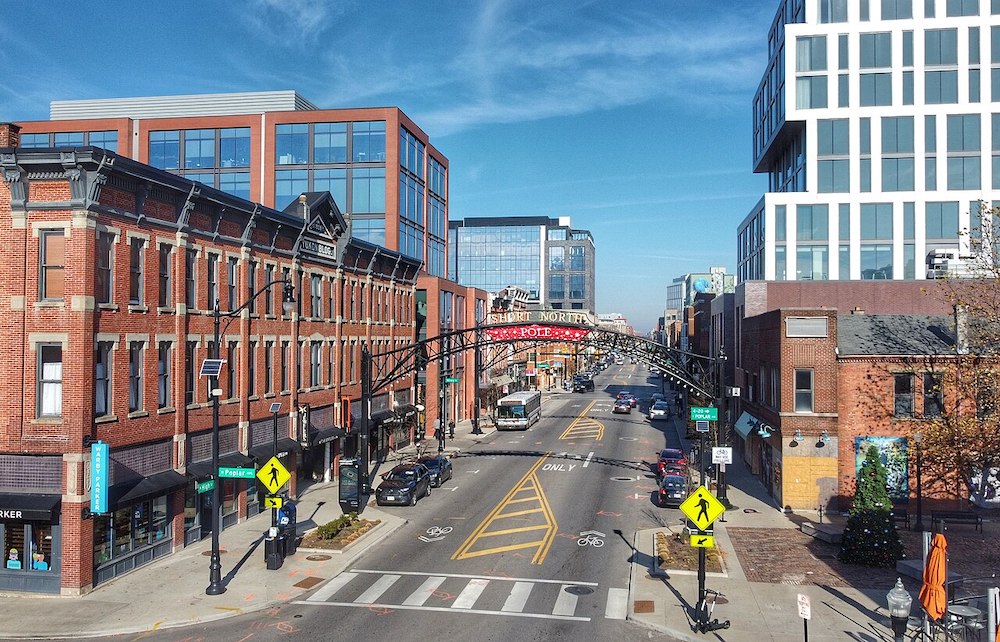
The Short North Arts District is one of many Columbus communities offering its own mix of architecture, amenities, and everyday lifestyle.
Finding your ideal neighborhood in Greater Columbus comes down to one core decision: defining what you want life to look like the moment you step out the front door. Across the metro area, identical home budgets unlock entirely different living environments, daily routines, and surrounding streetscapes. Identifying your top priorities early turns a vast regional map into a clear, focused home search tailored to your lifestyle.
Here’s what you need to know.
Table of Contents:
- BUDGET AND TRUE LIVING COSTS
- COMMUTES AND WEEKLY TRAVEL CORRIDORS
- SCHOOL DISTRICTS AND MUNICIPAL BOUNDARIES
- HOUSING STYLES, LAYOUTS, AND ARCHITECTURAL CHARACTER
- LIFESTYLE SETUPS AND LOCAL AMENITIES
- FUTURE GROWTH: WHAT MAY CHANGE AROUND YOU
- STREETSCAPES, LOT SETUPS, AND IMMEDIATE SURROUNDINGS
- NARROWING YOUR SEARCH TO THE COLUMBUS COMMUNITIES THAT FIT YOU
- FAQS
- CHOOSE THE COLUMBUS COMMUNITY THAT FITS YOUR PRIORITIES
1. BUDGET AND TRUE LIVING COSTS
Crossing a single neighborhood boundary in Central Ohio may swing your monthly payment by hundreds of dollars, as shifting school tax rates, municipal fees, and home ages tend to change what a house could cost you every month.
Because land values and development patterns vary across the city, your budget will allow you to buy very different types of homes and lifestyles depending on where you choose to live in Columbus, Ohio:
- Historic central areas like German Village offer historic homes on compact lots near brick-paved streets and walkable Third Street shops. In designated historic districts like these, exterior work requires a Certificate of Appropriateness (COA) and period-accurate materials, which means routine maintenance often costs more than in a standard neighborhood.
- Established inner-ring suburbs like Clintonville and Grandview Heights give you classic Craftsman bungalows and duplexes close to Downtown and Ohio State. Because you’re dealing with older homes for sale in Columbus, building a small repair buffer into your monthly plan should make managing roof or HVAC updates much easier.
- Outer suburbs like Dublin, Hilliard, Westerville, Grove City, and New Albany offer spacious multi-story layouts and new construction as you head toward the beltway. Because most of these newer homes sit inside planned subdivisions, you’ll typically pay monthly HOA dues that handle common-area upkeep in exchange for a lower-maintenance lifestyle.
LOCAL SAVINGS PROGRAMS WORTH EXPLORING
Whichever lifestyle tradeoff fits your routine, taking advantage of local financial programs should noticeably trim your upfront or monthly expenses:
- Down payment assistance: The Ohio Housing Finance Agency (OHFA) offers 2.5% to 5% in down payment assistance and discounted mortgage rates for eligible buyers. Specialized paths like the Ohio Heroes program provide additional discounts for teachers, healthcare workers, law enforcement, and firefighters.
- Property tax abatements: Community Reinvestment Area (CRA) programs in select Columbus communities waive property taxes on new construction or major renovations for up to 15 years. Paying taxes strictly on the land value during that window will save you hundreds of dollars on your monthly mortgage payment.
2. COMMUTES AND WEEKLY TRAVEL CORRIDORS
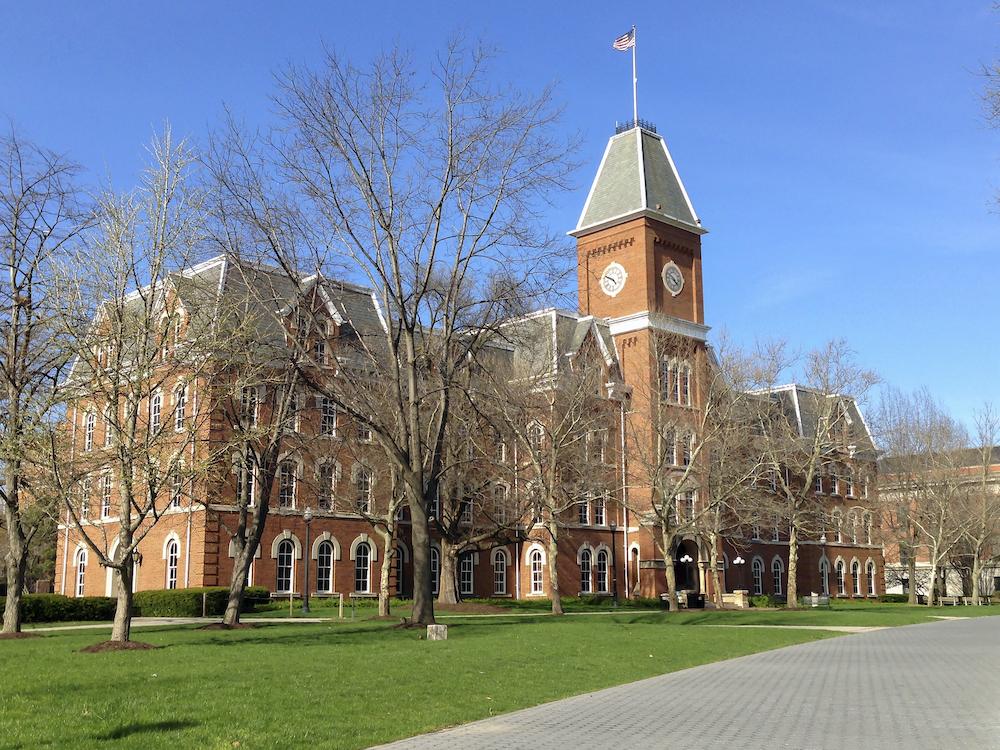
Proximity to major institutions like Ohio State shapes commute times and housing choices across Columbus communities.
Major highways like I-270, I-70, and SR-315 frame the region, but daily travel times depend heavily on which direction you drive. Looking at where your weekly routine actually takes you should help narrow your search to the most convenient parts of the region.
- Navigating central employment hubs like The Ohio State University (OSU), Wexner Medical Center, or Downtown relies heavily on central arteries such as SR-315 and Olentangy River Road from Clintonville, Grandview, and Upper Arlington.
- Connecting to eastern economic drivers along SR-161 − including Silicon Heartland developments, corporate campuses, and John Glenn International Airport − points directly toward eastern communities like Gahanna, Westerville, and New Albany.
- Accessing northwest commercial zones along the I-270 and US-33 corridors is convenient for residents in Dublin and Hilliard, with major workplaces, retail centers, and weekly errands within easy reach.
- Leveraging alternative commuter routes via the Central Ohio Greenways network connects many inner-ring neighborhoods to paved paths like the 15-mile Olentangy Trail, offering a direct route for commuting or recreation completely separated from highway traffic.
3. SCHOOL DISTRICTS AND MUNICIPAL BOUNDARIES
Having a Columbus mailing address doesn’t mean a home actually sits inside city limits or feeds into Columbus City Schools. Municipal borders, school districts, and local tax zones overlap all across Central Ohio. In fact, the Dublin City School District extends well past Dublin into parts of Columbus and Upper Arlington across three different counties, and you’ll run into those same overlapping lines in places like Hilliard, Westerville, and Worthington.
Why that matters so much comes down to the costs associated with a particular property. School district and municipal boundaries may affect property taxes, so two similarly priced homes in neighboring areas could come with different tax obligations.
Official parcel records through the appropriate county auditor − whether in Franklin, Delaware, Licking, or Fairfield − should help you get the definitive breakdown. A quick address lookup should provide information such as the property’s school district, tax rates, township or municipal boundaries, and other location-specific details.
4. HOUSING STYLES, LAYOUTS, AND ARCHITECTURAL CHARACTER
Deciding on a preferred home style early on narrows your search and prevents wasted time in Columbus communities that don’t match your vision. Central Ohio’s architectural styles often reflect when different parts of the region were developed, with certain home styles concentrated in particular areas:
- Historic brick cottages and restored 19th-century row houses feature original limestone foundations, wrought-iron accents, and compact footprints along the dense grid streets and cobblestone alleys of German Village and the near-south side. Inside, these homes typically feature defined formal living spaces, exposed brickwork, and cozy upper-level bedrooms.
- Craftsman bungalows, slate-roofed Tudors, and mid-century stone ranches bring original oak trim, built-in cabinetry, and deep-set yards to the tree-lined neighborhoods of Clintonville, Grandview, and Upper Arlington. These areas range from traditional neighborhood blocks to winding ravine lots along the Olentangy River, with many older homes retaining historic details and more compartmentalized floor plans.
- Modern multi-story floor plans, executive two-stories, and master-planned subdivisions define outer communities like Dublin, Westerville, Hilliard, Gahanna, Grove City, and New Albany. Built across wide cul-de-sac loops, this post-1990s housing stock defaults to open-concept main levels, integrated primary suites, attached multi-car garages, and dedicated office flex spaces.
5. LIFESTYLE SETUPS AND LOCAL AMENITIES
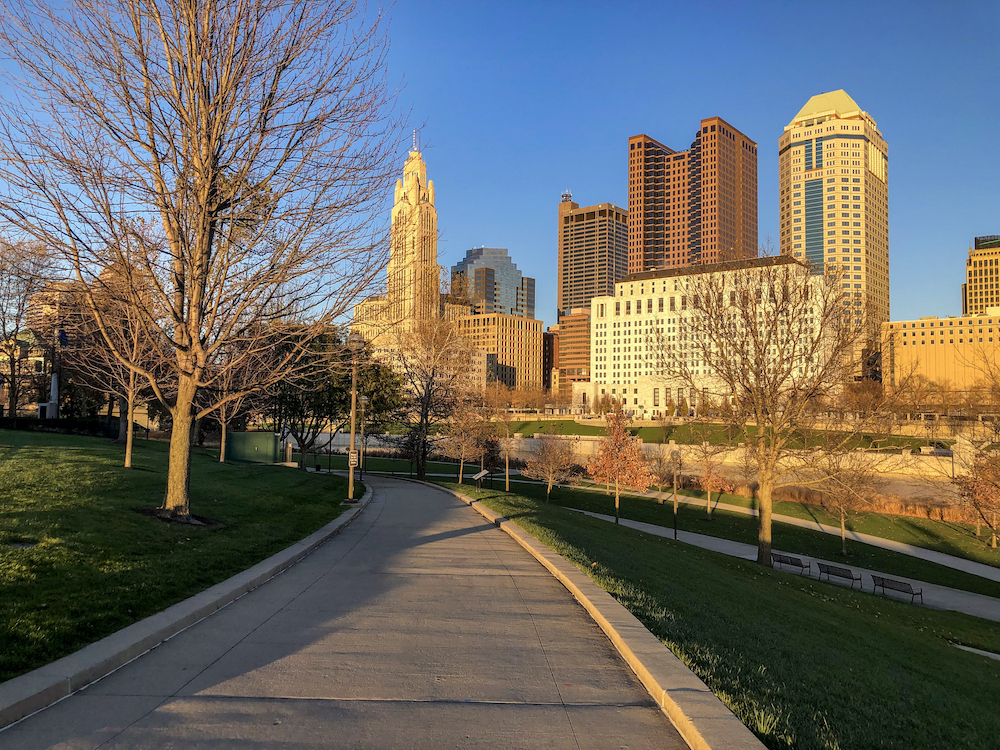
Communities in Columbus offer different levels of access to Downtown, parks, trails, and everyday amenities.
Matching a neighborhood to your daily routine grounds your search in how you actually live, as Columbus communities are built around distinct lifestyle setups:
- Historic, walkable density defines German Village, where morning stops at Pistacia Vera on Third Street, afternoon loops through Schiller Park, and walks along cobblestone streets like Beck and Mohawk all happen within a compact, brick-paved footprint.
- High-energy urban corridors run straight through the Short North District along High Street, placing independent art galleries, patio dining at spots like Forno, and monthly traditions like Gallery Hop right along the COTA CMAX transit line and minutes from Goodale Park.
- Contrasting riverfront districts shape the layout of Historic Dublin and Bridge Park, linking 19th-century limestone storefronts along High Street to the modern entertainment venues and patio dining at Pins Mechanical via the iconic Dublin Link.
- Traditional town centers remain focal points in Westerville, Worthington, and Hilliard, where traditional High and Main Street corridors host Saturday morning farmers markets, local spots like High Bank Co., and century-old brick storefronts.
- Creekfront amenities define places like Gahanna’s Creekside, connecting local coffee shops like Blank Slate directly to stone boardwalks, kayak launches, and wooded paths along the Big Walnut Creek watershed.
- Extensive trail access supports daily recreation in parts of Westerville, Bexley, and the Scioto Mile, which link directly to paved routes like the Alum Creek and Camp Chase trails for long-distance cycling and walking along off-street paths completely separated from vehicle traffic.
6. FUTURE GROWTH: WHAT MAY CHANGE AROUND YOU
A neighborhood that aligns perfectly with your routine today may look noticeably different a few years down the line, making local development plans an essential piece of your research. As infill projects, commercial expansions, and corridor updates continually shift the surrounding landscape across Greater Columbus, evaluating an area’s long-term trajectory requires looking at a few key local indicators:
- Checking neighboring parcels along active development corridors − like undeveloped acreage, aging commercial plazas, or light industrial tracts − reveals where future residential density or commercial projects are most likely to take shape.
- Reviewing municipal planning resources using the City of Columbus online zoning map or suburban growth plans in places like Dublin, New Albany, or Westerville outlines designated land uses, historic overlays, and long-range land plans.
- Weighing the long-term tradeoffs helps you balance how new corridor dining hubs, mixed-use centers, and updated road infrastructure will enhance daily convenience against potential shifts in local traffic patterns or existing open views.
7. STREETSCAPES, LOT SETUPS, AND IMMEDIATE SURROUNDINGS
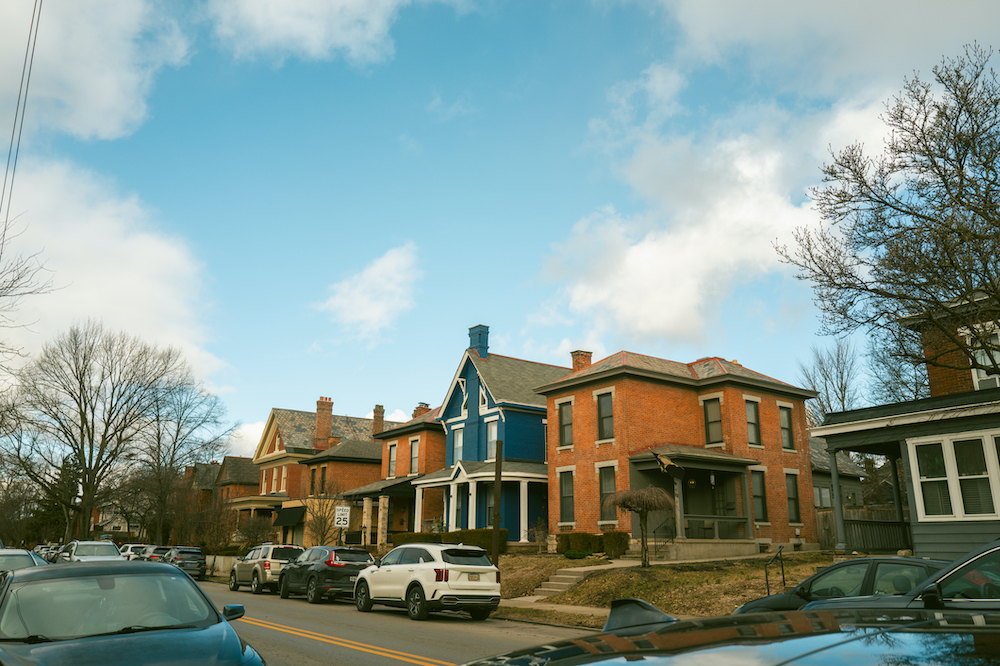
Established Columbus communities offer everything from historic homes to tree-lined residential streets close to the city core.
Two homes sitting in the same neighborhood may deliver completely different daily routines depending on their immediate block, lot position, and surrounding traffic patterns. Once you narrow your search to a few candidate communities, evaluating properties at street level ensures the location actually functions well when you step out your front door.
A home tucked deep inside an interior residential block creates a very different daily environment than one sitting near a major collector road. In older central areas like German Village or Clintonville, block setups vary dramatically from one street to the next, where historic grid layouts introduce alley access, shared driveways, and street parking dynamics.
Across outer subdivisions, lot widths, HOA guidelines, and proximity to community entrances tend to shift during individual development phases. Beyond street design, what sits directly behind a backyard fence − whether that’s a school zone, an undeveloped tract, or a commercial buffer − fundamentally shapes your privacy, noise levels, and evening light.
Taking time to explore the surrounding blocks in person uncovers the functional details listing photos miss, from sidewalk connectivity and visitor parking to peak rush-hour traffic. So, while choosing the right community narrows the map, choosing the right street determines how that location feels day after day.
NARROWING YOUR SEARCH TO THE COLUMBUS COMMUNITIES THAT FIT YOU
Comparing Central Ohio’s core neighborhood setups side by side helps clarify the daily tradeoffs that make the most sense for your lifestyle.
| FEATURED COMMUNITIES | BEST FOR | CORE ADVANTAGES | LOCATION CONSIDERATIONS |
|---|---|---|---|
| German Village Short North Arts District Victorian Village Italian Village Brewery District Arena District Discovery District Gay Street District |
High walkability and historic character | Built for a walkable lifestyle where coffee stops, gallery nights, and local dining sit right outside your front door against a backdrop of preserved 19th-century architecture and neighborhood parks like Goodale or Schiller. | Involves more compact lot sizes, street-parking dynamics, and historic district guidelines (like COA approvals) when making exterior home updates. |
| Clintonville Grandview Heights Upper Arlington Bexley Worthington University District |
Established residential setting and central access | Combines traditional neighborhood character with convenient central access, offering shaded streets and local business blocks within easy reach of Downtown and OSU. | Features older housing stock that may require ongoing repair buffers for systems like HVAC or roofing, alongside variable layout styles. |
| Dublin New Albany Powell Westerville Gahanna Hilliard Grove City Pickerington Canal Winchester Groveport Reynoldsburg Whitehall |
Expanded space, trail access, and modern layouts | Prioritizes elbow room and everyday convenience with updated floor plans, multi-car garages, and direct access to community parks and regional bike trails like Alum Creek and Big Walnut. | Involves a bit more driving for daily errands, longer peak-hour travel times to the urban core, and standard HOA dues in master-planned subdivisions. |
FAQs
How do I know which Columbus community is the right fit for me?
Pick your top three non-negotiables, such as monthly budget, commute, or home size, and eliminate areas that do not match them. From there, visit your target neighborhoods in person to see if they fit your actual daily routine.
Should I choose the house or the community first?
Pick a shortlist of communities first, because you can update a house’s interior, but you cannot change its location, commute, or school district. Only expand your search to new areas if every available home in your target neighborhood requires too much compromise.
How long does the Columbus home-buying process take?
Finding the right house may take anywhere from a few weeks to several months depending on your target neighborhood. Once a seller accepts your offer, closing on a standard mortgage usually takes about 30 to 45 days.
What are the signs a Columbus neighborhood is about to change?
You can spot upcoming changes by checking the City of Columbus online development trackers and zoning maps for nearby building permits. Visiting the neighborhood at different times of day also helps you spot vacant land, active roadwork, or new commercial projects.
Why don’t a home’s mailing address and school district always match in Columbus?
A Columbus mailing address doesn’t always mean the home is within Columbus city limits or assigned to Columbus City Schools. Many properties with a Columbus ZIP code actually fall under neighboring municipalities or different school districts, such as Dublin, Worthington, or Hilliard. These boundaries may also affect property taxes and local services. Before making an offer, verify the home’s school district, tax jurisdiction, and municipality rather than relying on the mailing address alone. A local real estate agent will help you confirm these details so you know exactly what you’re buying.
How competitive is the housing market in different Columbus communities?
Market intensity shifts depending on the specific neighborhood, price tier, and property type. Established pockets like Upper Arlington, Bexley, and German Village see fierce competition, whereas some outer suburban developments offer buyers more breathing room. Investors navigating these competitive shifts often diversify across multiple regions—leveraging Local Property Management in Pearland for Texas rental holdings while competing for high-yield residential properties in Central Ohio.
How much time should I spend in a community before deciding to buy there?
Visit a neighborhood at least two or three times during normal weekly conditions before submitting an offer. Driving the area during rush hour and walking the streets on a weekend morning reveals daily noise, parking, and traffic patterns that photos cannot show.
CHOOSE THE COLUMBUS COMMUNITY THAT FITS YOUR PRIORITIES
Matching your daily routine to the right Central Ohio neighborhood takes ground-level insight, clear market perspective, and deep local roots. Since 1985, Conley & Partners has brought that exact regional expertise to buyers across urban and suburban Greater Columbus − helping you compare locations, verify critical property details, and pinpoint a community where you feel right at home.
When you’re ready to start a tailored home search, call Conley & Partners at 614.595.4344 or reach out directly through their contact page.